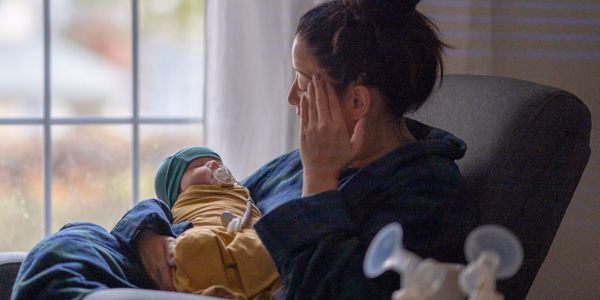
After delivery, you are supposed to experience one of the happiest moments of your life. Right? This is what you've been waiting for... so what happens if you feel sad? "The Baby Blues" refers to a state of heightened emotion, in the first couple of weeks after you give birth, in which you may cry more easily, have trouble sleeping, and feel irritable, sad, or on edge. More than 80 percent of women report feeling blue immediately after giving birth, so if you feel this way, you aren't alone. You're not a bad parent, and you're not a weak person.
Postpartum Mental Health
Sometimes, these feelings may last more than a few days. Postpartum depression, a more severe form of depression, can develop within the first year after giving birth. Feelings such as sadness, anxiety, and restlessness may even become strong enough to interfere with daily tasks. Though it isn't known for sure what causes postpartum depression, many medical professionals believe hormones play a big role.
(And once again, thank you, dear hormones!) During pregnancy, estrogen and progesterone hormones increase greatly; but in the first 24 hours after delivery, they rapidly drop back to non-pregnant levels. This fast change in hormone levels can lead to depression.
You should contact your healthcare provider if you still experience these mood swings or feel depressed more than one week after the birth of your baby; if you feel you are unable to cope with daily activities in your life, such as caring for your newborn or older children; and if you have strong feelings of depression or anger one to two months after childbirth, have trouble sleeping, or have suicidal thoughts.
Please remember, if you experience any of these symptoms, you aren't alone. Support is available. Counselling, antidepressants, and hormone therapies are just a few examples of effective treatments available, should you experience postpartum depression.
Your Birth Story
Recording your birth story is a gift to yourself, and to your child. When you're experiencing these things for the first time, you'll think it's completely unforgettable. And, in many ways, it is. But a few months from now, you may find yourself wondering... what time was it when you first started feeling labour contractions? Or... was your little one 19 inches or 19½ inches long? Life barrels along, with sleepless nights, new adventures, and more, keeping you busy. The details may start to get fuzzy around the edges.
In those early days after the birth, in between those initial feedings and while your little newborn is sleeping, write down your birth story. It doesn't have to be anything fancy. You aren't writing for a national magazine or aiming for any bestseller lists. Simply create a snapshot of the moment, because your life will have forever changed. Someday, your child will be able to see what you were thinking and feeling during their first moments on earth.
Some questions to consider: What are some of the details of your conception and pregnancy? Was it an easy journey? What were some of your challenges during conception and pregnancy? What were your thoughts and feelings in the days leading up to birth? Was your labour scheduled or unexpected? What were you doing when you first realized you were in labour and having a baby? Who was with you? Who was there and with you at the hospital, or in your delivery room at home?
List some details, like the names of your doctors, midwives, doulas, and/or nurses. The time of delivery. Your baby's weight, length, Apgar scores, etc. What was the funniest moment of the day? The scariest? The most touching? What were your thoughts and feelings when you finally held your new baby in your arms for the first time? These details, combined with photographs, will be a keepsake to treasure for years.
You can even begin to answer the pre-birth questions right now, in your pregnancy journal, before you forget!