
Your C-Section Journey: What to Expect and How to Talk to Your Doctor About Your Wound Closure Options
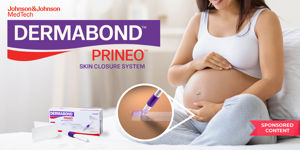
You've Made the Decision to Have a C-section - Now What?
Choosing to have a C-section is a deeply personal decision. Whether it's planned or recommended for medical reasons, it's natural to want to understand what happens during the procedure - and what choices you have along the way. Here's something many moms don't realize: you can actually discuss with your OB-GYN how your incision will be closed.
This detail might seem small, but it can influence how comfortably you recover, how your scar heals, and how confident you feel after surgery. As you build your C-section birth plan, consider asking your doctor about closure options. It's one more way to make choices that support both your healing and your peace of mind.
What Happens During a C-section?
A C-section (cesarean section) is a surgical procedure used to deliver your baby through an incision in your abdomen and uterus. It's one of the most common and safest surgeries performed for childbirth today.
Before the procedure begins, your medical team will help you get ready:
- A catheter is inserted into your bladder to keep it empty during surgery
- An intravenous (IV) line is placed to provide fluids and medication
- For pain relief, most women receive an epidural or spinal anesthetic, which keeps you awake but pain-free (in emergency situations, general anesthesia may be used instead, meaning you'll be asleep during delivery)
Once you're numb, your OB-GYN makes an incision through the skin, fatty tissue, and abdominal wall, then a second incision in the uterus to deliver your baby. In most cases, this is a horizontal "bikini cut" made low across the abdomen, though in certain medical circumstances, a vertical incision may be needed. After your baby is delivered and the umbilical cord is cut, your doctor removes the placenta and closes your uterus and deeper tissue layers with dissolving stitches.
Then comes the final step: closing your skin layer. This can be done in several different ways - using staples, stitches, or surgical glue skin adhesive systems. While all methods are safe and effective, the approach your doctor uses can influence your comfort during recovery, how much care your incision needs, and the appearance and recovery of your scar. That's why it's worth discussing your options with your OB-GYN ahead of time.
Understanding Your C-Section Wound Closure Options
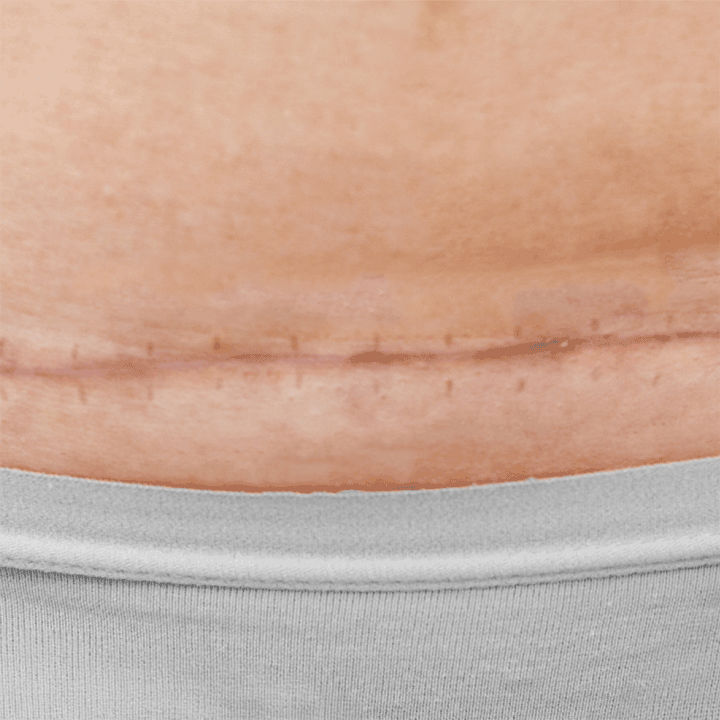
Use of staples on the incision
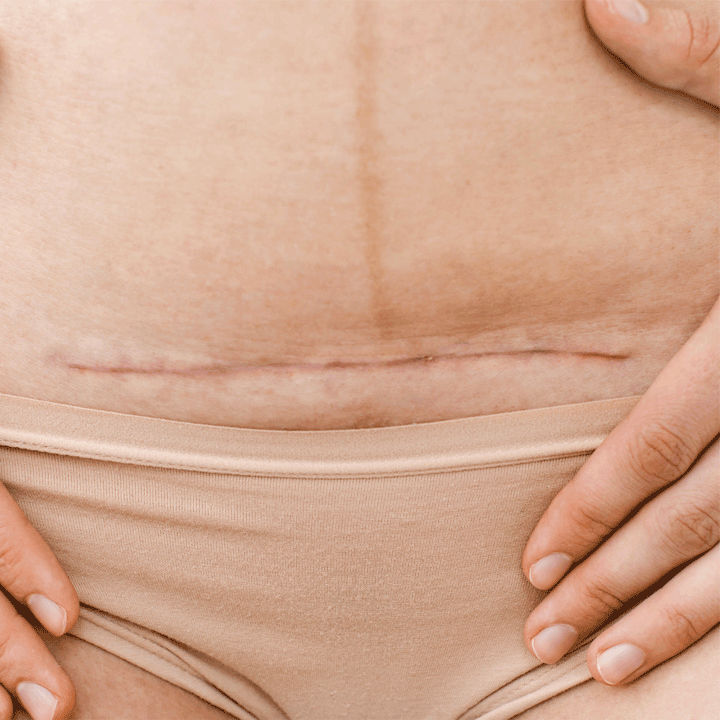
Use of stitches on the incision
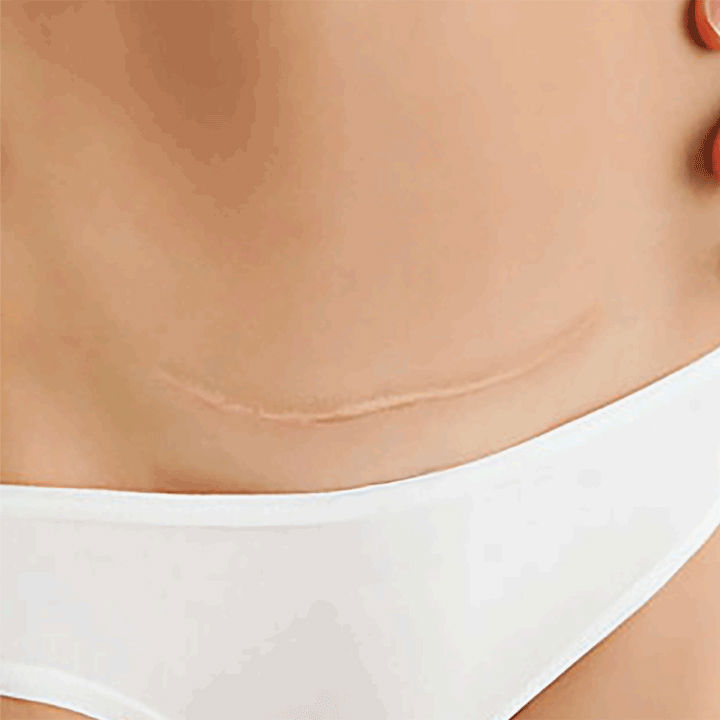
Use of DERMABOND™ PRINEO™ on the incision
Staples
What they are: Metal clips that hold your skin edges together
What to know:
- Fast and efficient for surgeons to apply
- Need to be removed by healthcare professional a few days after surgery, which can cause mild discomfort
- May leave more visible marks along the incision line
- Studies suggest a slightly higher rate of wound complications compared with sutures
Sutures (Stitches)
What they are: Medical threads (often absorbable) used to sew your incision closed.
What to know:
- Usually associated with fewer wound complications than staples
- Can result in smoother, less noticeable scars compared to staples
- No need for removal if absorbable sutures are used
- Takes more time for the surgeon to apply
- You may feel mild tightness or pulling as you heal
Surgical Glue Skin Adhesive System (such as DERMABOND™ PRINEO™ Skin Closure System)
What it is: A modern non-invasive skin closure system that combines a medical grade liquid skin adhesive with a self-adhering mesh to hold your skin incision together - no staples or external stitches required. The adhesive naturally peels off in about 2 weeks with no painful removal as there is no piercing of the skin.
What to know:
- Studies have shown that DERMABOND™ PRINEO™ Skin Closure System has stronger holding strength than staples and stitches
- Results in better looking scar as the system uniformly redistributes tension of incision across surrounding healthy skin
- Provides waterproof protection and acts as a microbial barrier shown to block 99% of organisms linked to surgical site infections
- Can shower right after surgery if directed by a healthcare professional
- Studies suggest a lower rate of wound complications compared with both sutures and staples
- You can learn more about this closure option here.
Important to note: Not all hospitals offer this closure option, so ask ahead of time. Your OB-GYN can tell you if it's available and whether it's suitable for your specific situation.

Questions to Ask Your OB-GYN
When you discuss your C-section birth plan, consider asking:
- What skin closure method do you typically use, and why?
- Is a skin adhesive system like DERMABOND™ PRINEO™ available at my hospital?
- What will incision care look like with each option?
- Which method might work best given my medical history and the type of C-section I'm having?
Your doctor will help you decide what's right for you based on your individual needs and preferences.
The Bottom Line
Every C-section closure method can lead to a healthy recovery, but each one shapes your healing experience differently. The method your doctor uses influences how quickly you feel comfortable moving around, how much care your incision needs afterward, and how your scar looks over time. That's why it's worth having this conversation before delivery.
Understanding how staples, stitches, or modern surgical glue skin adhesive systems work empowers you to make an informed choice that supports your comfort, confidence, and long-term healing. Your C-section story is uniquely yours and feeling informed is the best way to start recovery with peace of mind.