
How to Clear a Baby's Blocked Nose: A Parent's Guide

Few things are more worrying than hearing your baby struggling to breathe through a blocked nose.
Whether it's making feeding more difficult, interrupting naps or simply leaving your little one feeling unsettled, nasal congestion is incredibly common during baby's first year.
During Canada's colder months, dry indoor heating can also make congestion more noticeable, even when your baby isn't unwell.
The reassuring news is that, in most cases, a blocked nose isn't anything to worry about and can often be managed at home with a few simple steps.
Here's what causes a blocked nose, how you can help your baby breathe more comfortably, and when it's time to seek medical advice.
Why do babies get blocked noses?
Unlike adults, babies have very small nasal passages. Even a tiny amount of mucus can make them sound congested, particularly during the first few months of life. Because young babies mainly breathe through their noses, even this mild congestion can make feeding and sleeping more difficult.
Some of the most common causes of a blocked nose include:
- Colds and other viral infections
- Dry indoor air, particularly during the long winter months when home heating can reduce humidity
- Dust, pet dander or other environmental irritants
- Milk or spit-up after feeds
- Normal newborn mucus as your baby's airways adjust after birth
The good news is that most cases of congestion are mild and improve on their own with a little time and gentle care.
How to safely clear your baby's blocked nose
When your baby is congested, it's natural to want to help right away. Fortunately, there are several gentle ways to help clear their nose and make your little one more comfortable.
1. Use a saline nasal spray or drops
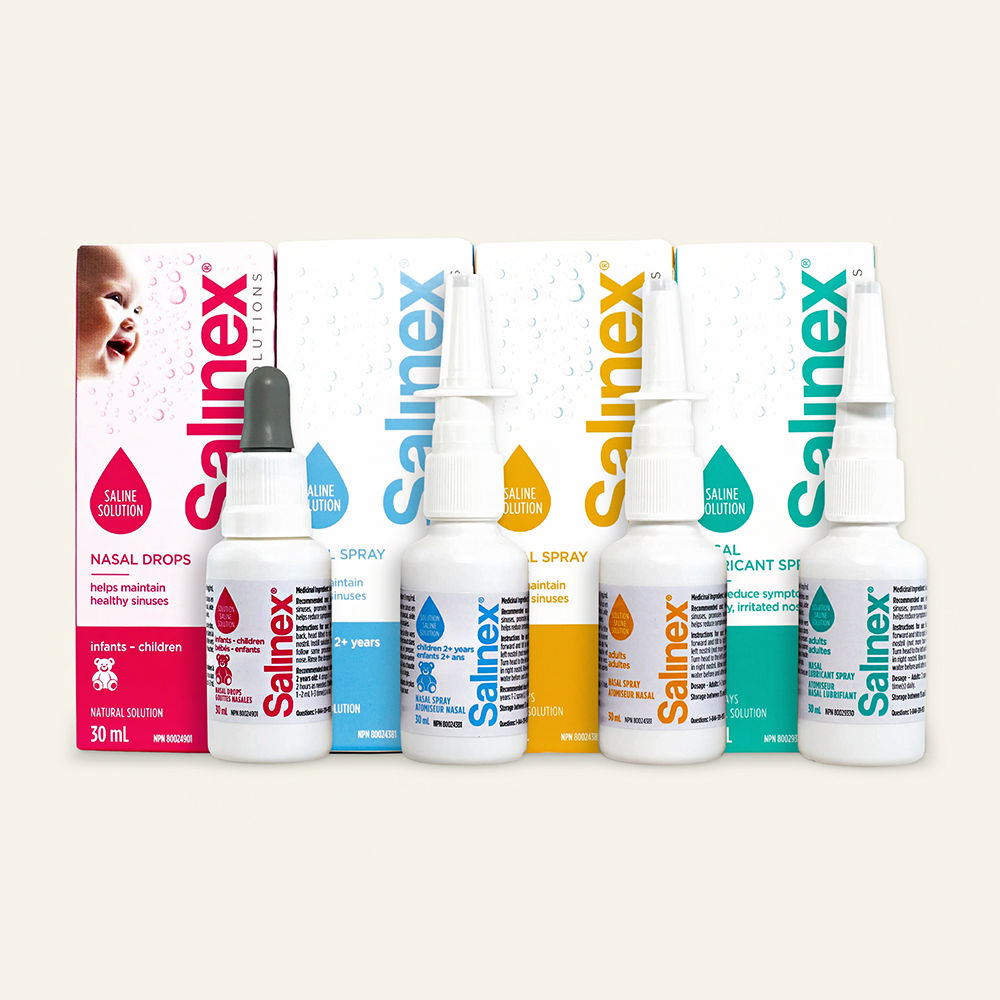
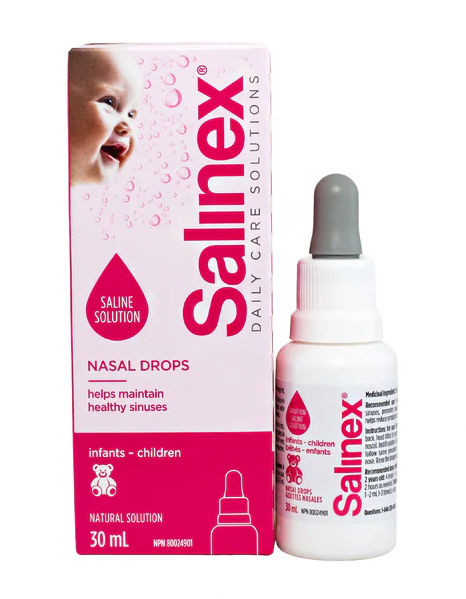
A saline nasal spray or saline drops designed specifically for babies, such as Salinex® Daily Care nasal drops for infants and children, can help loosen and soften thick mucus, making it easier to clear naturally or remove with gentle suction.
Because saline contains no medication, it's often recommended as a first step for relieving everyday nasal congestion in babies. Always do your research to choose a product that's appropriate for your baby's age and make sure you follow the instructions on the packaging.
2. Use a nasal aspirator if needed
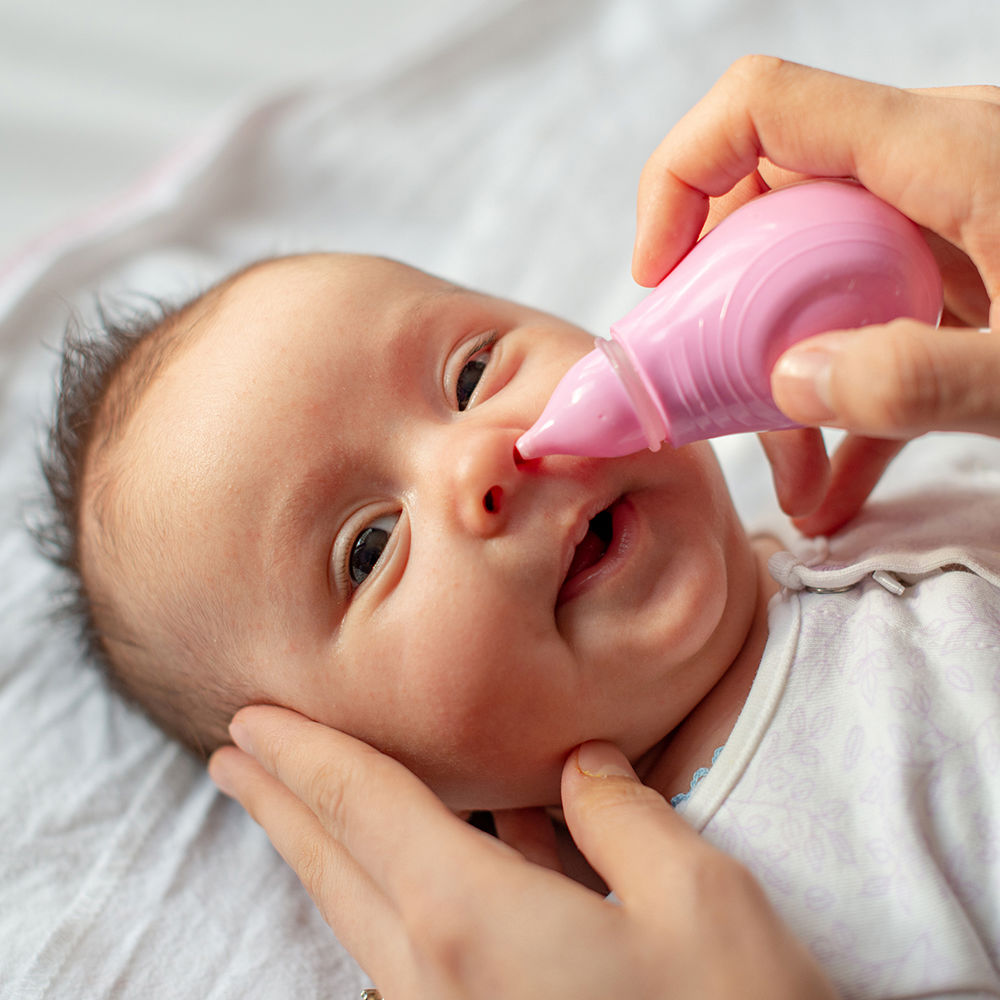
If your baby has visible mucus that's making it difficult to breathe, feed or settle, a nasal aspirator can help gently remove loosened mucus after using saline spray or drops.
Many parents find it helpful to clear their baby's nose before feeds and bedtime, when congestion is most likely to cause discomfort. Try not to overuse an aspirator, as frequent suction can irritate the delicate lining of your baby's nose.
3. Keep your baby hydrated
Whether you're breastfeeding or bottle-feeding, offering regular feeds helps keep your baby hydrated. Fluids can help prevent mucus from becoming thick and sticky, making it easier to clear.
If your baby is struggling to feed because of congestion, it's a good idea to speak with your healthcare provider.

4. Try a cool-mist humidifier
Dry air can make congestion feel worse. This is especially common during the winter months, when central heating reduces humidity inside our homes.
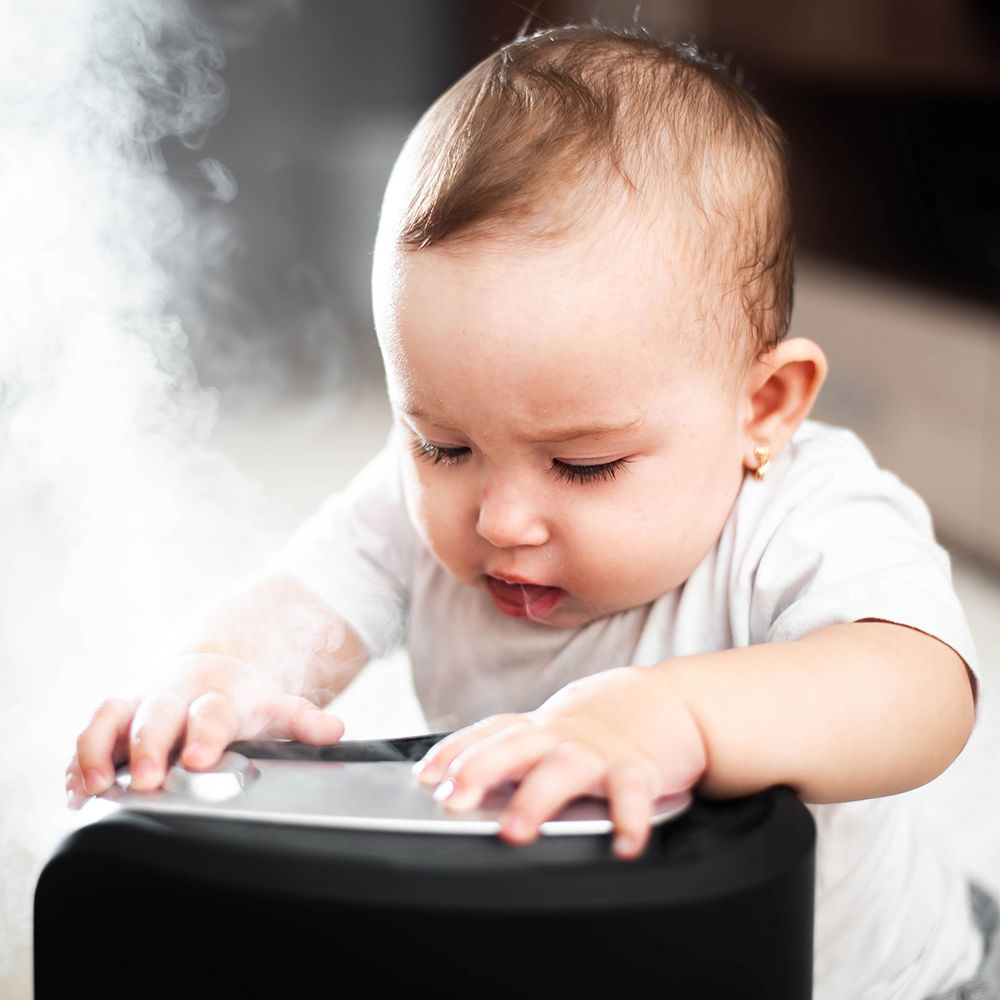
A cool-mist humidifier may help make the air more comfortable for your baby and prevent their nasal passages from drying out. Be sure to clean the humidifier regularly according to the manufacturer's instructions to prevent bacteria from building up.
5. Hold your baby upright
Holding your baby upright while they're awake can sometimes help mucus drain more easily and make breathing feel more comfortable.
After feeds, keeping your baby upright for a short period may also help if spit-up is contributing to congestion.
Always follow safe sleep guidelines and place your baby on their back on a firm, flat sleep surface for naps and overnight sleep.

Things to avoid
While there are lots of home remedies online, not all of them are safe for babies.
Avoid:
- Adult nasal sprays or decongestants unless specifically recommended by your healthcare provider.
- Putting cotton swabs or any objects inside your baby's nose.
- Essential oils, menthol rubs or strong vapours around young babies.
- Raising your baby's mattress or using pillows to ease congestion, as this isn't recommended for safe sleep.
If you're ever unsure about a treatment, it's always best to check with your healthcare provider or pharmacist before trying it.
When should you seek medical advice?
Most blocked noses improve within a few days and can be managed at home.
However, it's important to contact your healthcare provider if your baby:
- Is struggling to breathe or breathing unusually fast.
- Is having difficulty feeding because of congestion.
- Has a fever, particularly if they're under three months old.
- Seems unusually sleepy, difficult to wake or less responsive than usual.
- Has symptoms that are getting worse or haven't improved after several days.
Frequently asked questions
The bottom line
A blocked nose is one of the most common reasons new parents worry during their baby's first year - but thankfully, it's usually temporary and easy to manage.
Simple steps like using a gentle saline nasal spray, removing mucus when needed, keeping your baby hydrated and maintaining a comfortable home environment can all help your little one breathe more easily.
Most importantly, trust your instincts. If your baby's congestion is affecting their breathing, feeding or overall wellbeing, or if something simply doesn't feel right, don't hesitate to seek advice from your healthcare provider.
The information on the Your Baby Club website is intended for general informational purposes only and should not be used as a substitute for professional medical advice, diagnosis or treatment. Always discuss any health concerns with a qualified healthcare provider and carefully read the information provided with any medications, products or supplements before using them.